
Level 3 Building Survey in St Albans
A Level 3 Building Survey is the most detailed inspection and report defined by the RICS Home Survey Standard. It is designed for older, extended, altered or unusual properties. It also suits any buyer who wants a full picture of a building's construction and condition before committing to it.
What does a Level 3 survey cover?
We inspect every visible and accessible part of the property, inside and out. That covers the roof coverings and structure, chimneys, rainwater goods, external walls, windows and doors, internal walls, ceilings, floors, joinery and the grounds. We also assess the visible parts of the services: electrics, gas, heating, plumbing and drainage. Services are inspected visually, not tested. Where something raises concern, the report says so plainly and tells you which specialist to instruct before you exchange.
We enter the roof space wherever there is safe access. We lift loose floorboards and inspection covers where practical and permitted, and take damp meter readings through the ground floor rooms. Where a roof cannot be seen properly from the ground or a ladder, drone roof photography is available as an add-on, wherever it is safe and legal to fly.
What does the report include?
Every element of the property gets a condition rating, so you can see the priorities at a glance. Where a Level 2 report largely stops at identifying a problem, a Level 3 goes on to explain:
- what is causing it
- the repair options open to you
- what is likely to happen if you leave it
- how the work is generally prioritised.
Our Level 3 reports also include cost estimates for the repair works, so you can budget and negotiate with figures in hand.
The report includes photographs throughout, including drone images of the roof where used. It also has a section on legal matters for your conveyancer to pursue before contracts are exchanged.
The main parts of the property we inspect during a Level 3 Building Survey are shown below:
- Roof coverings and structure
- Roof space wherever there is safe access
- Chimneys, rainwater goods
- External walls, windows and doors
- Loose floorboards and inspection covers where practical and permitted
- Damp meter readings through the ground floor rooms
- Electrics, gas, heating, plumbing and drainage
- The grounds
When is a Level 3 survey the right choice?
Choose a Level 3 Building Survey when the property is:
- pre-war or older, particularly Victorian, Edwardian or timber-framed
- listed, or within one of the St Albans conservation areas
- extended, converted or significantly altered
- visibly defective, neglected or unmodernised
- somewhere you plan to renovate, extend or reconfigure.
If you are buying a conventionally built, reasonably modern home that appears in fair condition, a Level 2 Home Survey is usually the better-value choice. If you are unsure, read our guide to choosing between Level 2 and Level 3. For a new build, a snagging inspection is designed for that situation.
Buying older property in St
St Albans has one of the most varied housing stocks in Hertfordshire: timber-framed and Georgian buildings around Fishpool Street and the city centre, Victorian and Edwardian terraces near the station and through Fleetville, 1930s semis in Marshalswick and the outer suburbs, and post-war and modern estates beyond them. Much of it is over a century old, and a good deal has been extended or altered more than once.
The recurring issues we report on locally follow that stock:
- damp in solid brick walls, often made worse by cement pointing or render trapping moisture
- slate and clay tile roofs reaching the end of their serviceable lives
- movement in properties on shrinkable clay subsoils, particularly where mature trees stand close by
- cellars with limited ventilation
- loft conversions and extensions of mixed quality, some without evidence of building control approval.
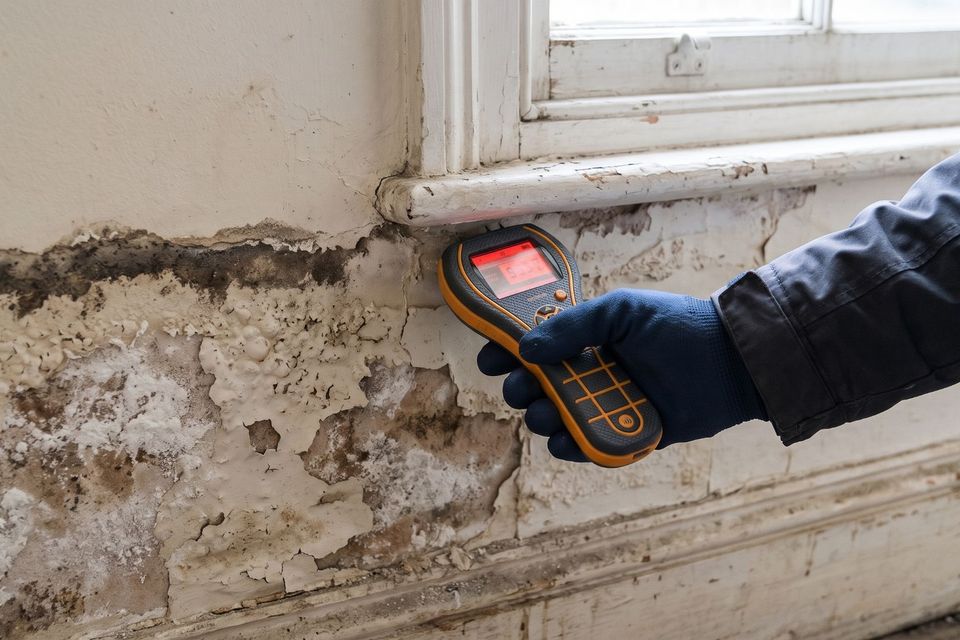
A Level 3 survey is designed to identify these problems, explain how serious they are, and set out what to do about them.
How it works
- Pre-inspection consultation. Before we visit, we can talk through the property and anything that concerns you, such as a crack you spotted on the viewing, a flat roof or a musty smell. The inspection then targets your worries as well as our standard scope.
- Surveyor inspection. One of our surveyors carries out the inspection personally. Drone roof photography can be added where a roof cannot be seen properly from the ground.
- Your report within 5 working days. We deliver the full report within 5 working days of the inspection.
- Post-report walkthrough. Once you have read it, we book a call to go through the findings, the priorities and your questions. That call is part of the service, not an extra.
What a Level 3 Building Survey costs
We quote each survey individually, because the fee depends on the size, age, construction and complexity of the property. Send us the address or the listing link and we will come back with a written quote. Quotes are free and carry no obligation.
Why buyers choose Verulam
Verulam is an independent practice regulated by RICS, with no ties to builders or developers. You instruct us directly and you deal with a surveyor directly, not a call centre or a case handler. Founded in 2018, we hold a 4.8-star rating on Google from 40+ reviews.
★★★★★
I cannot recommend Verulam Surveyors highly enough. Gavin could not have been more diligent. I was blown away by his deep expertise, really thorough report and fast turnaround. He also called afterwards to talk through the findings and answer all our questions. I have been recommending Verulam to everyone I know.
Book a Level 3 Building Survey in St Albans
Send us the property address through our contact form. We are an RICS-regulated firm of building surveyors based in St Albans, and we also carry out building surveys across Hertfordshire, the Home Counties, London and Essex. Not sure whether you need a Level 2 or a Level 3? Ask us. We will tell you honestly, even when the answer is the cheaper survey.
Frequently asked questions
How much does a Level 3 Building Survey cost in St Albans?
We quote each Level 3 survey individually, so there is no set price. The fee reflects the property's size, age, construction and complexity. Send us the address and we will provide a written quote, free and without obligation. As a rule, a Level 3 costs more than a Level 2 because the inspection and the report go into considerably more depth.
How long does a Level 3 Building Survey take?
The inspection takes several hours on site, and your report will be ready within 5 working days. Time on site depends on the size, age and condition of the property: an extended period house takes longer than a compact modern one. If your transaction is time-critical, tell us when you book.
Is a Level 3 Building Survey the same as a full structural survey?
Yes, in everyday language. "Full structural survey" is the old informal name for what the RICS Home Survey Standard now calls a Level 3 Building Survey. It is not, however, a structural engineer's report. If the inspection identifies significant structural movement, the report will say clearly whether a structural engineer should be instructed.
Should I get a Level 2 or a Level 3 survey for a Victorian house?
For most Victorian houses we recommend a Level 3. Solid walls, ageing roof structures and a century of alterations usually mean there is more to investigate and explain than a Level 2 format allows. A Level 2 can still suit a heavily modernised Victorian home in clearly good order. Read our guide, or call us and we will advise on the specific property.
Do you use a drone for the roof inspection?
We can. Drone roof photography is available as an add-on wherever it is safe and legal to fly. It lets us examine roof slopes, chimneys, valleys and flat roofs that cannot be viewed properly from the ground or a ladder, and the images are included in your report. If flying is not possible on the day, for example because of weather or airspace restrictions, the report states what limited the inspection.
What happens after I receive my report?
We book a walkthrough call with you. Every Level 3 survey includes a post-report call with the surveyor who inspected the property, covering the findings, what matters most, and what to do next, including anything your conveyancer should raise before exchange. You are welcome to come back to us with follow-up questions after that too.